When your lawn looks pale or stops filling in the way you’d hoped, fertilizer seems like a reasonable next step. Then you get to the store. One bag promises results with organic ingredients, while another offers a greener lawn with a synthetic formula. Should you use organic or synthetic fertilizer for best results?
Either can work. The better choice depends on what your lawn needs, how the product releases its nutrients, and what you expect to happen after you spread it.
There’s also a possibility that you don’t need fertilizer yet.
Start With Why the Grass Is Struggling
A thin lawn isn’t always a hungry lawn. Grass may struggle where the soil is compacted, where water collects, or where a tree shades most of the yard. Fertilizer won’t correct those conditions.
Before choosing a product, have the soil tested. The results can help you understand nutrient levels and whether the soil’s pH needs attention. That’s useful information when you’re standing in front of several bags that all sound promising.
And consider how the yard gets used. If the grass looks good everywhere except along the route from the back door to the shed, foot traffic deserves some attention. Feeding that strip more heavily probably won’t solve the problem.
What Organic Fertilizer Offers
Organic fertilizers commonly contain ingredients derived from plant or animal materials. Many depend on soil microorganisms to break those materials down and make nutrients available to the grass.
That takes time.
If you’re comfortable with a gradual response, an organic product may suit your lawn care routine. But don’t expect every organic fertilizer to behave alike. Ingredients vary, and some products include nutrients that become available more quickly than others.
Weather matters, too. In cool Maine soil, microbial activity can be slower, which affects how quickly certain organic products supply nutrients. A lawn may not respond as promptly as someone expects after an early spring application.
Some organic materials also contribute organic matter. Still, a normal fertilizer application isn’t the same as a soil improvement project. If your soil needs substantial work, choosing an organic bag alone won’t finish the job.
What Synthetic Fertilizer Offers
Synthetic fertilizers can provide a concentrated, predictable supply of nutrients. Some contain readily available nitrogen, which may produce a quicker response when the grass is actively growing and conditions are suitable.
Others release nutrients gradually.
That distinction gets lost in the organic-versus-synthetic discussion. Synthetic doesn’t automatically mean fast, and organic doesn’t guarantee that every nutrient releases slowly. Read the fertilizer analysis and look for information about slow-release or water-insoluble nitrogen.
A synthetic product containing slow-release nitrogen may be a practical choice if you want steady feeding without relying entirely on the breakdown of organic ingredients.
There’s nothing wrong with wanting the lawn to look better soon. Just remember that a quick flush of growth also means more mowing. Darker grass isn’t proof that you chose the best rate.
Which Gives You More for Your Money?
Compare what the bag supplies, not just what it costs.
Many organic fertilizers have lower nutrient concentrations than synthetic products. Depending on the formulas, you may need more material to supply the same amount of nitrogen. That can affect the number of bags you buy and carry around the yard.
But a higher nutrient concentration doesn’t mean you should apply more. It means you need to measure carefully.
Check the coverage directions and match the application to your lawn’s needs. A bag that covers more ground may be economical, but only if its nutrient balance fits your soil recommendations. Paying for nutrients your lawn already has enough of offers little benefit.
Can Either Type Harm the Lawn?
Yes, especially when it’s used incorrectly.
Too much readily available fertilizer can injure grass. Excess nutrients from either organic or synthetic sources can also move away from the lawn and contribute to water pollution. “Natural” doesn’t mean an unlimited amount is harmless.
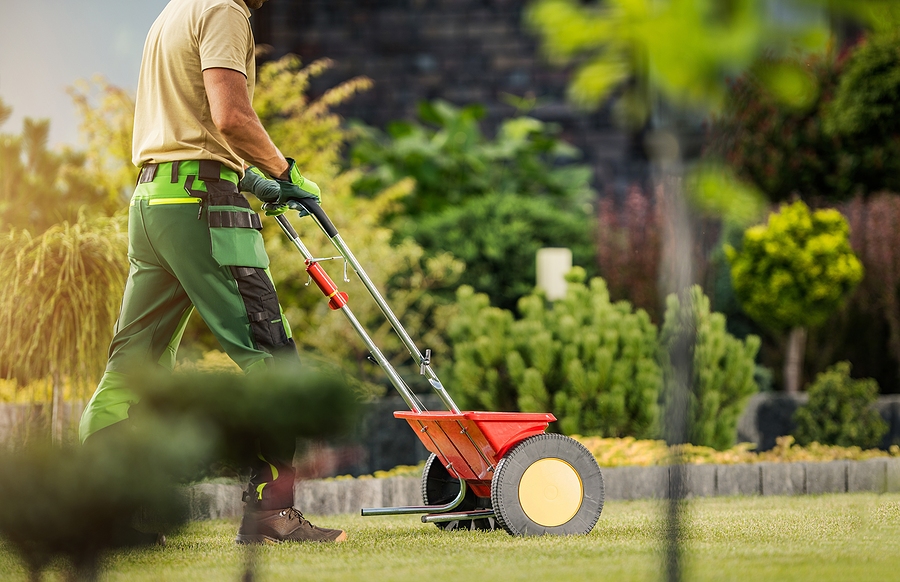
Measure your lawn before setting the spreader. Follow the product’s directions for application and watering, and sweep stray granules off pavement back onto the lawn.
And resist adding another application just because the first one hasn’t produced a dramatic change. The product may release slowly, or something other than nutrition may be limiting growth.
Your Mowing Routine Matters, Too
Fertilizer is only part of lawn care. Regular mowing at a suitable height helps maintain the grass, and leaving ordinary grass clippings on the lawn returns nutrients as they decompose.
Those clippings count.
You may need less purchased fertilizer than you would if you routinely collected and removed them. A lawn that already grows well may also need less feeding than one managed for a consistently lush appearance.
Should you use organic or synthetic fertilizer for best results? Choose according to your soil recommendations and the way the product works. Either can support healthy grass when the amount and timing fit the lawn.
For help keeping up with mowing and landscape maintenance in the Kennebunk area, contact One Mow Co. to discuss your property and request an estimate.