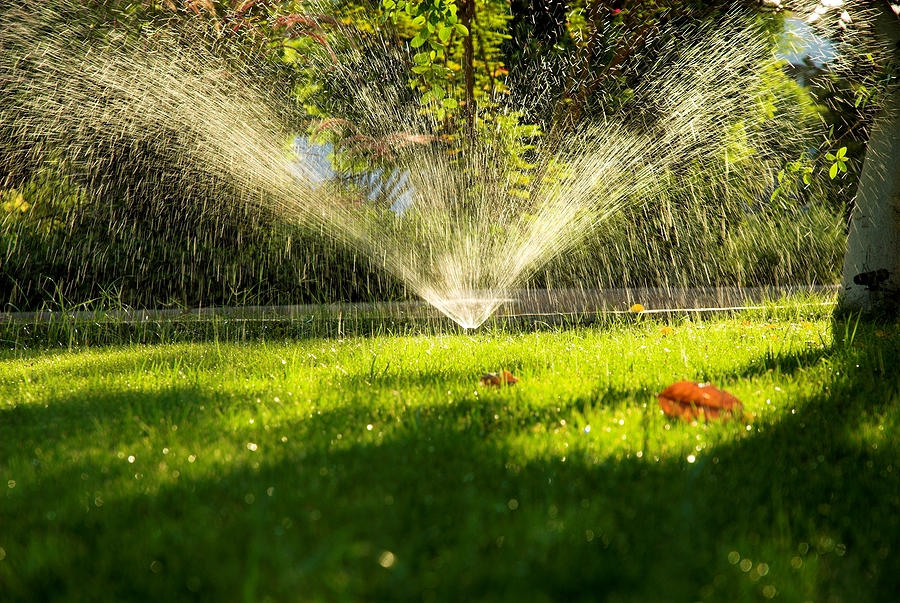
Early morning is usually the best time of day to water your lawn. The air is cooler, there is often less wind, and the grass has the rest of the day to dry. For many homeowners, watering around sunrise is a practical place to start.
The timing helps, but it is only part of caring for the lawn. A sprinkler that runs every morning can still deliver too much water. Another might run for half an hour without reaching a dry area beside the driveway. Your soil, rainfall, grass type, and sprinkler coverage all affect how much good that watering actually does.
Why Is Morning a Good Time to Water?
During the cooler morning hours, less water is lost to evaporation than during a hot afternoon. Calmer conditions can also help sprinkler water reach the intended area instead of drifting onto the sidewalk or garden furniture.
Morning watering gives wet grass time to dry as daylight and temperatures increase. University of Minnesota Extension recommends early morning irrigation for that reason, along with watering deeply and less frequently when the lawn needs it.
You do not need to treat one exact minute as the perfect time.
If you use a hose and portable sprinkler, choose a morning period when you can keep track of it. With an automatic system, consider how long all the zones take to finish.
Always follow any watering restrictions that apply to your property, city, or county.
Is It Bad to Water the Lawn at Night?
Of course, after a long day of working, evening watering can seem convenient. You are home, the temperature has dropped, and there is time to move a sprinkler around the yard before the sun sets or even in the darkness.
The big concern of watering at night is how long the grass stays wet afterward. Watering near sunset can extend the period of leaf wetness through the night, particularly when conditions are humid and the lawn already receives dew during the nighttime hours. Extended wetness can favor some lawn diseases such as fungal infections or rot.
That does not mean one evening watering will ruin the grass or cause other problems. However, early morning watering is the best habit.
What If I Miss the Morning?
Missing your usual watering time is not the end of the world. It doesn’t automatically mean the lawn needs water that afternoon or that it’s going to die.
Check the soil and recent weather first. If the ground still holds moisture and the grass is doing well, you may be able to wait until the next suitable morning. There is little benefit in watering simply because the calendar says it is time.
Should I Water a Little Every Day?
For an established lawn, a brief daily sprinkle is usually not the best approach. It may wet the grass and upper soil without supplying much moisture farther into the root zone.
A more thorough watering, followed by time for the soil to begin drying, generally makes better sense. How often that is needed depends on the property.
Sandy ground loses moisture differently from heavier soil. A sunny section may dry faster than a sheltered one. Rain can take care of the lawn’s needs for a while, making the next scheduled irrigation unnecessary.
For homeowners who choose to irrigate, University of Maine Cooperative Extension recommends reducing watering frequency and accounting for rainfall. An established lawn should not automatically receive water every day throughout the growing season.
New grass is an exception.
Freshly seeded areas need light, frequent watering to keep the seedbed appropriately moist during germination. As the grass establishes, watering can gradually become deeper and less frequent. Newly laid sod also needs an establishment schedule suited to its condition.
How Long Should the Sprinkler Run?
There is no single number of minutes that works for every sprinkler.
One may apply water quickly over a small area. Another may rotate slowly across a much larger space. Water pressure and the placement of sprinkler heads also affect the result.
You can get a better idea of coverage by placing several matching, straight-sided containers around the watering area. Run the sprinkler for a measured period, then compare how much water collected in each container.
Large differences can reveal a coverage problem.
If one corner remains dry while another is soaked, increasing the runtime for the entire lawn may waste water without resolving the uneven distribution. Also watch for water running down the driveway. That can indicate the application needs to be adjusted so the soil has time to absorb it.
Build a Routine Around Your Lawn
The best time of day to water your lawn is usually early morning, but the best routine also responds to rainfall and the condition of the soil. Check the lawn before adding water, allow for differences across the yard, and adjust as the season changes.
One Mow Co. provides lawn mowing and landscape maintenance for properties in York County, Maine. If you would like help keeping your yard maintained throughout the growing season, contact the team to request an estimate.