When it comes to lawn mowing, homeowners typically only consider aesthetics. Sure, a freshly mowed lawn looks nicer, but cutting grass is actually more beneficial than you might think. Timing is one of the most important factors in lawn care that homeowners often overlook. The timing of your lawn maintenance schedule can affect everything about your grass, including what happens beneath the surface. Read on to learn how lawn mowing timing affects root strength.
Why are Roots Important?
While you won’t see them, roots are every lawn’s foundation. Roots determine how well your grass can uptake water, nutrients, and oxygen from the soil. Proper mowing timing can help your roots grow stronger, while improper mowing habits can cause your lawn to deteriorate over time.
Root Strength Is Key for Many Reasons
Grass roots do all the behind-the-scenes work that keeps your lawn looking its best. When roots are strong and deep, grass can:
- Reach additional sources of moisture deep in the soil
- Uptake nutrients more efficiently
- Recover from adversity (be it damage or disease)
- Resist drought
- Tolerate foot traffic
- Fight off pesky insects
When grass roots are shallow, homeowners often experience brown patches, thin grass, slow growth, or even increased weed activity.
How Cutting Your Grass Affects Roots
Mowing might not receive as much attention as watering or fertilizing, but cutting your grass plays an important role in root development. Here’s why.
Blades and Roots Work Together
Simply put, your grass functions as a single system. What affects the blades won’t always directly impact the roots, but your grass blades and roots do rely on each other.
Grass Blades Are Like Solar Panels
Your lawn’s grass blades act as solar panels, absorbing sunlight and transforming it into energy through photosynthesis. Once energized, your grass uses this energy to fuel both top and root growth.
However, when you cut your grass too short or too frequently, you are hindering your lawn’s ability to make energy. As a result, your grass will spend more time and energy trying to replace lost blade growth instead of expanding and strengthening its roots.
You May Loathe Mowing Your Lawn, but Roots Need It
Many homeowners make the mistake of letting their grass grow too long between mowings. Then, when it’s time to cut the grass, they remove too much at once. Instead of giving your lawn time to recover between frequent mowings, you stressed your grass out by cutting it too short.
- Your lawn establishes deeper roots when the timing of your cuts is consistent.
- Don’t Remove More Than 1/3 of the Blade at a Time
- One handy rule of thumb many lawn care professionals follow is the one-third rule.
According to this rule, you shouldn’t remove more than one-third of the grass blade during any single lawn mower outing. For instance, if you keep your lawn trimmed to three inches, you shouldn’t allow the grass to grow any taller than about four inches before your next mow.
Cutting more than one-third of the blade at a time can stress out your grass and limit root growth. You’re much more likely to follow the one-third rule by sticking with a regular lawn care schedule. This is another reason why weekly lawn mowing services typically produce healthier lawns than those who mow less frequently.
Cutting Your Grass Too Short Is Never a Good Idea
It should come as no surprise that cutting your grass too short can damage your roots. While many believe mowing their lawn shorter will allow them to stretch the time between mowings, it typically has the opposite effect.
Mowing grass too short, also known as scalping, deprives your lawn of much of its leaf surface. This makes it harder for grass to produce energy.
Instead of encouraging strong roots, cutting your grass too short will lead to:
- Lawn roots struggling to reach deeper moisture
- A yard that’s more prone to drought stress
- Weeds moving in to take advantage of weak grass
- Disease infestation
- Slow recovery after damage
Cutting your grass at the proper height helps encourage deep roots and a stronger lawn.
Know Your Grass Type to Determine Ideal Height
The ideal grass height varies by type. However, most warm-season turf thrives when cut within specific height ranges. Make sure you know the recommendations for your grass type and mow accordingly.
Different Seasons, Different Growth Rates
The time of year can also affect how often you need to cut your grass. Grass doesn’t grow at the same rate all year long.
Remember how we talked about grass blades being like solar panels? Well, during the spring and summer months, your lawn will get a lot of sun (and likely rainfall) due to longer days and hotter temperatures. As a result, you’ll have to cut your grass more often.
Waiting too long to cut your grass will force your lawn to absorb more than one-third of its blade at a time, weakening your roots in the process. However, if you live in an area that experiences cooler temperatures in the fall and winter, you may not have to cut your grass as frequently.
Match your mowing schedule to your grass’ growth rate, and you’ll avoid unwanted stress on the roots.
Wait to Mow Until the Evening
Have you ever wondered if the time of day you mow matters? It does!
Cutting grass early in the morning is not ideal if your grass is wet from overnight dew. Not only will your lawn mower have a hard time cutting wet grass, but your grass will be more prone to uneven cuts, clumping, and disease.
Mowing during the hottest part of the day can be just as detrimental. Not only will you be inviting stress to your grass, but you’ll be putting yourself at risk for heat-related injuries.
That’s why many lawn care professionals prefer to cut grass during late morning and early evenings.
Be sure to cut your grass at the same time each day.
While when you cut your grass does not significantly impact root strength, it can still affect the overall health of your lawn.
Professional Mowing Ensures a Consistent Schedule
Cutting your grass may not be your favourite chore. Between waiting for the perfect opportunity when it’s not raining, pouring yourself a drink after a sweaty mowing session, or dealing with lawn mower maintenance, it’s no wonder some homeowners consider skipping a week or two here and there.
But when you skip mowing, you’re skipping out on the chance to encourage healthy roots. Your lawn mower is just like any other appliance. Neglect it for too long, and it’s going to grow bigger than you can handle. The same goes for your grass.
Professional lawn services provide reliable lawn maintenance so you won’t have to worry about uneven cut patterns, getting dirty, or harming your lawn’s roots.
Professional lawn care companies know the proper heights to cut certain grass types and will adjust your service schedule as needed when seasonal growth patterns change.
The Result? Stronger roots and an attractive yard.
Healthy Roots Lead to a Healthy Lawn
Instead of just treating the symptoms of a lawn problem, start from the roots. Although proper fertilization and watering have big roles in your lawn’s health, so does your lawn mower.
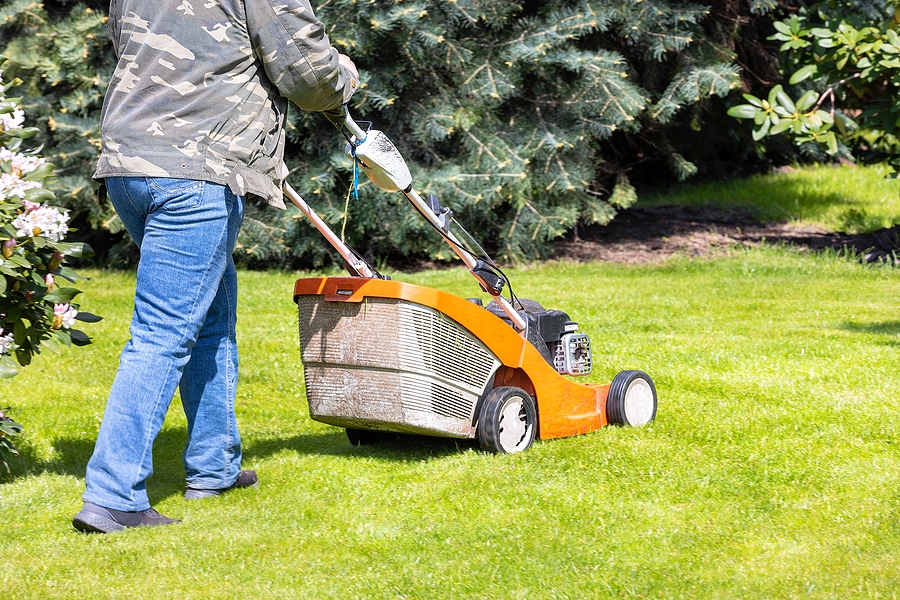
Now that you understand how lawn mowing timing affects root strength, you can make more informed decisions when it comes to caring for your lawn. Keep up with your lawn maintenance by sticking to a consistent mowing schedule, never cutting more than one-third of the grass blade at a time, and giving your lawn mower some routine maintenance of its own.
If you live in Florida and are ready to maintain a beautiful lawn all year round, count on One Mow Co. to strengthen your lawn from the roots up. Contact One Mow Co. today to learn more about our lawn mowing services.