Coastal Maine lawns deal with salty breezes, summer dry spells, and the occasional gully-washer that runs straight off roofs and driveways. That’s why rainwater harvesting for lawn irrigation is catching on across Kennebunk. Instead of paying to bring potable water in and paying again to move stormwater out, you can capture roof runoff, store it, and reuse it on your turf and planting beds. The result is a healthier lawn, lower utility bills, and a landscape that handles storms more gracefully.
Why Rainwater Harvesting Fits Kennebunk
Kennebunk’s climate swings, from soaking spring rains to August heat, reward homeowners who balance storage with smart scheduling. A cistern or a series of barrels collects what the roof already sheds. When dry weather hits, a small pump delivers steady pressure to your irrigation zones at dawn, so water soaks in rather than flashing off in midday sun. That rhythm pairs perfectly with a coastal lawn: deeper roots, fewer disease problems, and better resilience when the wind kicks up off the water.
The sustainability angle matters, too. Capturing runoff reduces the burden on storm drains and helps protect nearby waterways. Add a rain garden for overflow, and you’ve transformed a once-wasted resource into a living feature that filters and slows water on your property.
What Counts as a Rainwater Collection System?
Think of it in layers. First, the roof and gutters route water into screened downspouts. A simple pre-filter strains leaves and grit. From there, water enters storage, a barrel for small jobs or a larger above- or below-ground cistern for whole-lawn supply.
A pressure pump and controller connect to your existing irrigation valves, so your lawn “sees” a normal water source without you lugging hoses around. The last piece is overflow: when a big storm exceeds storage, water is directed safely to an infiltration area or a landscaped basin rather than toward the foundation or driveway.
Barrels vs. Cisterns: Choosing Scale
Rain barrels are a great starter: they’re affordable, easy to tuck against the house, and perfect for hand-watering or feeding a short drip line to beds near the foundation. If your goal is to run multiple lawn zones reliably, a cistern makes more sense. With hundreds to a few thousand gallons on tap, you can schedule deep, infrequent irrigation cycles that actually build turf resilience.
A quick rule of thumb helps size your storage: each 1,000 square feet of roof can yield roughly 620–650 gallons in a one-inch storm. That means even a modest roof can refill a 1,000-gallon tank quickly in spring or during a good summer thunderstorm. The trick is matching tank size to your lawn’s weekly demand so you’re using what you store without overspending on capacity you rarely need.
The Kennebunk Context: Codes, Safety, and Winter
If your system is standalone, rainwater only, there’s no tie-in to potable water. If you want automatic city-water backup for dry stretches, you’ll need a backflow device and a clear separation so drinking water can’t be contaminated by irrigation lines. It’s standard practice and part of a safe, code-compliant design. A reputable installer will specify the right assembly, coordinate approvals, and schedule routine testing.
Winterization is non-negotiable. Barrels and exposed lines must be drained before freeze, pumps protected, and lids secured. For below-grade cisterns, plumbing is designed for easy blow-out with the rest of the irrigation system. Treat it like you would a sprinkler winterization, and your equipment will last for years.
What a Well-Designed System Includes:
- Pre-filtration at the downspout to keep leaves and roof grit out of storage and away from valves and emitters.
- Appropriately sized storage—barrels for hand-watering, 500–2,500+ gallon cisterns for multi-zone lawns.
- A compact pressure pump and smart controller so irrigation runs at dawn, skips after rain, and adapts to seasons.
- Inline filtration to protect valves, sprays, and drip lines.
- A safe potable backup (optional) with code-compliant backflow protection, if you want automatic switchover in dry spells.
- A daylighted overflow path to a rain garden, swale, or permeable area so big storms become a landscape asset, not a headache.
Watering Practices That Actually Help Your Lawn
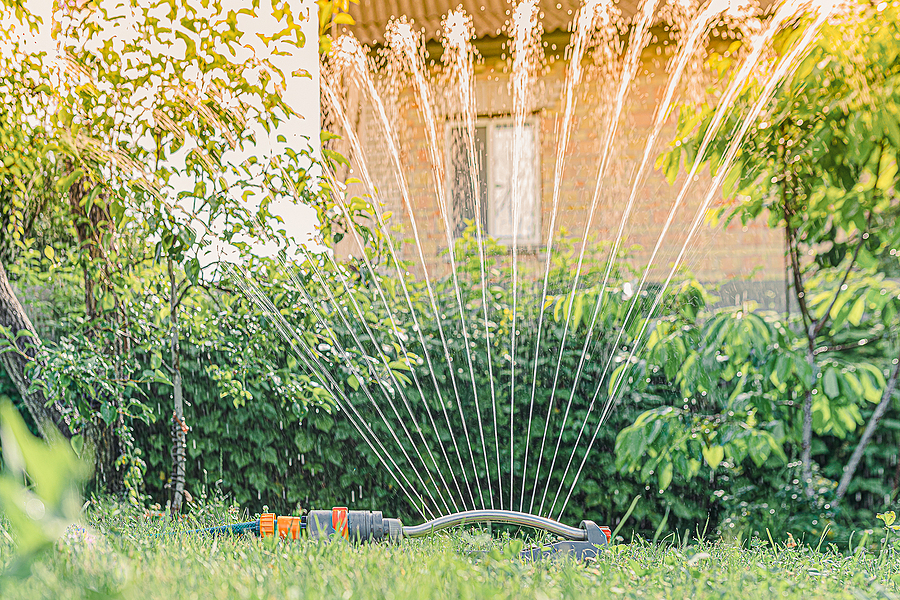
With storage in place, the biggest gains come from how you water. Early-morning cycles give moisture time to soak in before the sun lifts; evening cycles can sit on the leaf blades and invite disease. Deeper, less frequent watering pushes roots down and cuts your overall usage.
Mowing a bit higher keeps soil shaded and cool, which further reduces how often you need to irrigate. Combine those habits with a tank full of free rainwater, and you’ll notice your turf looking better with less effort.
A Kennebunk-Sized Example
Picture a home with 1,500 square feet of connected roof. In a one-inch rain, that roof can deliver around 900–1,000 gallons to storage, enough for one or two deep irrigation cycles on a compact lawn.
A 1,000–1,500-gallon cistern is a practical match: big enough to capture meaningful runoff, small enough to fill quickly during spring showers or summer storms. We’d screen the tank with coastal-appropriate materials (cedar or granite), run a short, neat piping route to your irrigation manifold, and direct overflow to a small, planted rain garden that looks intentional year-round.
Common Pitfalls and How We Avoid Them
- Oversizing without an overflow plan: A bigger tank still needs a safe place for excess water to go during big storms. We design overflow first.
- Undersizing for the lawn’s demand: A single barrel won’t keep multiple zones green in August. We right-size storage to your turf, not just your roof.
- Skipping backflow protection: Any dual-supply system must protect the potable side. We specify the correct device and manage testing.
- Forgetting winterization: Barrels crack and pumps fail if left full. We build an easy winter shutdown into every design.
Cost, Payback, and the “Feel-Good” Factor
Every property is different, but the math is simple: your roof sheds thousands of gallons each year. Capturing a slice of that offsets municipal water use during the most expensive, highest-demand months. Pairing storage with smarter scheduling often cuts total irrigation needs by itself. Over a few seasons, those savings add up—especially as water rates and seasonal surcharges rise. Just as importantly, your landscape will look better under stress, and your property will handle heavy rain days with less erosion and driveway runoff.
How One Mow Co. Delivers in Kennebunk
We start with a site walk to read sun, wind, soil, and downspout locations. We map roof catchments, measure lawn demand, and recommend a storage size that makes sense for how you actually use your yard.
From there, we design clean plumbing runs, specify durable tanks and pumps, and integrate everything with your existing irrigation controller. We also plan the overflow landscape so it functions and looks great, often as a tidy bed, a native planting, or a small rain garden that adds seasonal color.
When installation day comes, our crews keep things neat and fast. We label shutoffs, walk you through winterization, and set your controller to water at the right times. If you choose potable backup, we handle the backflow paperwork and schedule routine testing. After the first season, most clients tell us the same thing: the lawn looks better, the controller runs less, and they feel good about using what the sky gives them.
Ready to Put Your Rain to Work?
If you’re considering rainwater harvesting for lawn irrigation or want to compare barrels vs. a full rainwater collection system, we’d love to help. One Mow Co. designs, installs, and maintains turnkey systems that fit Kennebunk’s homes, weather, and coastal conditions, complete with winterization, smart scheduling, and code-compliant backflow protection.
Let’s capture what your roof already gives you, and grow a stronger lawn with less waste. Contact us today to learn more.