There is always that one section of the lawn that refuses to cooperate.
The grass looks great out near the driveway, but under the maple tree it is thin enough to see the soil. Maybe the strip along the north side of the house stays patchy no matter how often you seed it. You water. You fertilize. You throw down more grass seed. Still, the same bare spots come back.
Sometimes the problem is not how you are caring for the lawn. It is the grass itself.
So, what grass type is best for shady areas of the yard? For lawns in Maine and other cool-season regions, fine fescues are generally among the best choices. Creeping red fescue and hard fescue tolerate significantly less sunlight than Kentucky bluegrass and many other common lawn grasses. Tall fescue can also perform well where there is light or partial shade.
That said, even the most shade-tolerant grass still needs some sunlight. If an area stays dark most of the day, changing the seed may only take you so far.
Why Does Grass Struggle Under Trees?
Shade is only part of the problem. A big tree does not simply block sunlight. Its roots are competing with the grass for water and nutrients at the same time.
That can create a difficult little growing environment beneath the canopy.
The soil may stay dry because tree roots pull moisture out quickly. Grass gets fewer hours of sunlight, which means it produces less energy through photosynthesis. Fallen leaves may cover the turf in autumn, and low-hanging branches can make the area even darker.
Then homeowners sometimes respond by adding more fertilizer.
That does not necessarily help.
Grass growing in shade usually needs less nitrogen than turf in full sun. Pushing excessive top growth can actually make shaded grass weaker.
Before assuming the lawn needs more products, look up. The tree may be telling you what is really going on.
Which Grass Handles Shade Best in Maine?
For most shaded Maine lawns, fine fescue deserves to be near the top of the list.
Fine fescues are a group of cool-season grasses known for their narrow blades and ability to tolerate conditions that can be difficult for other turf species.
Two particularly useful options are creeping red fescue and hard fescue.
Creeping red fescue is especially useful because it can spread through underground stems and gradually knit into the lawn. It performs well in light shade and can also handle relatively dry, acidic, or lower-fertility soils.
Hard fescue is another good shade performer. It grows more as a bunch grass, so it does not spread the same way creeping red fescue does, but it can be a useful component of a low-maintenance seed mixture.
In many yards, a blend containing several fine fescues works better than relying on one grass variety alone.
Is Kentucky Bluegrass Good for Shade?
Not particularly. Kentucky bluegrass is popular because it can create a dense, attractive lawn under the right conditions. It also handles Maine winters very well.
What it really wants, though, is sunlight.
In a bright, open yard, Kentucky bluegrass can perform beautifully. Put it beneath a dense tree canopy and it may gradually thin out.
That does not mean you can never use bluegrass in a lawn that has some shade.
Mixtures containing both bluegrass and red fescue are common because each grass contributes something different. The bluegrass performs well in sunnier sections while the fescue has a better chance of hanging on where light becomes limited.
The result can look much more consistent across a yard that moves in and out of shade.
What About Tall Fescue?
Tall fescue is another possibility, especially where the shade is not extremely dense.
Modern turf-type tall fescues are much finer and more attractive than the coarse fescues many people remember from years ago. They also tolerate heat, drought, foot traffic, and a range of soil conditions fairly well.
Their shade tolerance is considered good, although fine fescues generally have the edge when sunlight becomes limited.
Tall fescue can make sense in an area that receives several hours of sun but spends part of the day shaded by the house or trees.
There is one consideration for Maine homeowners: not every tall fescue variety has the same cold hardiness.
Seed selection matters. A blend developed for northern lawns is a much safer choice than grabbing whatever bag happens to say “tall fescue” on the front.
Can Perennial Ryegrass Grow in Shade?
It can germinate there. Keeping it there is another question.
Perennial ryegrass is popular in seed mixtures because it germinates quickly and produces usable turf faster than Kentucky bluegrass. That quick start can be helpful during overseeding.
Its shade tolerance, however, is relatively poor. It also may not have the winter hardiness of some other grasses used in Maine lawns.
A little perennial ryegrass in a mixture can provide fast coverage, but it would not be my first choice if the main problem is a deeply shaded part of the property. For that, you generally want the mix weighted more heavily toward fine fescues.
How Much Sun Does Shade-Tolerant Grass Still Need?
This is where expectations become important. “Shade tolerant” does not mean “grows without sunlight.” Grass is still a plant, and it needs light to produce energy.
An area receiving filtered sunlight beneath a relatively open tree canopy may grow fine fescue quite well.
The dark corner between the garage and a row of mature evergreens may be another story.
If almost no direct or filtered sunlight reaches the soil, repeatedly adding grass seed may become an expensive ritual.
Sometimes the best answer is to stop trying to grow turf there.
Mulch, shade-tolerant groundcovers, planting beds, or another landscaping treatment may look better and require far less maintenance than constantly repairing grass that does not want to grow.
Should You Trim Trees to Help the Grass?
Careful pruning can help. Removing selected lower branches or thinning portions of a dense canopy may allow considerably more sunlight to reach the lawn without removing the tree.
This is not about hacking branches off until the yard looks like a parking lot.
Thoughtful pruning can increase filtered light while preserving the appearance and health of the tree. Raising lower branches may also improve air movement underneath the canopy.
If major pruning is needed, especially on a large or mature tree, it is worth having the work evaluated by someone experienced in tree care.
Damaging a valuable shade tree just to save a patch of grass would be a pretty poor trade.
Should Grass Be Mowed Differently in Shady Areas?
Yes. One of the easiest things you can do for shaded turf is leave it a little taller.
More leaf surface means the grass has more area available to capture limited sunlight.
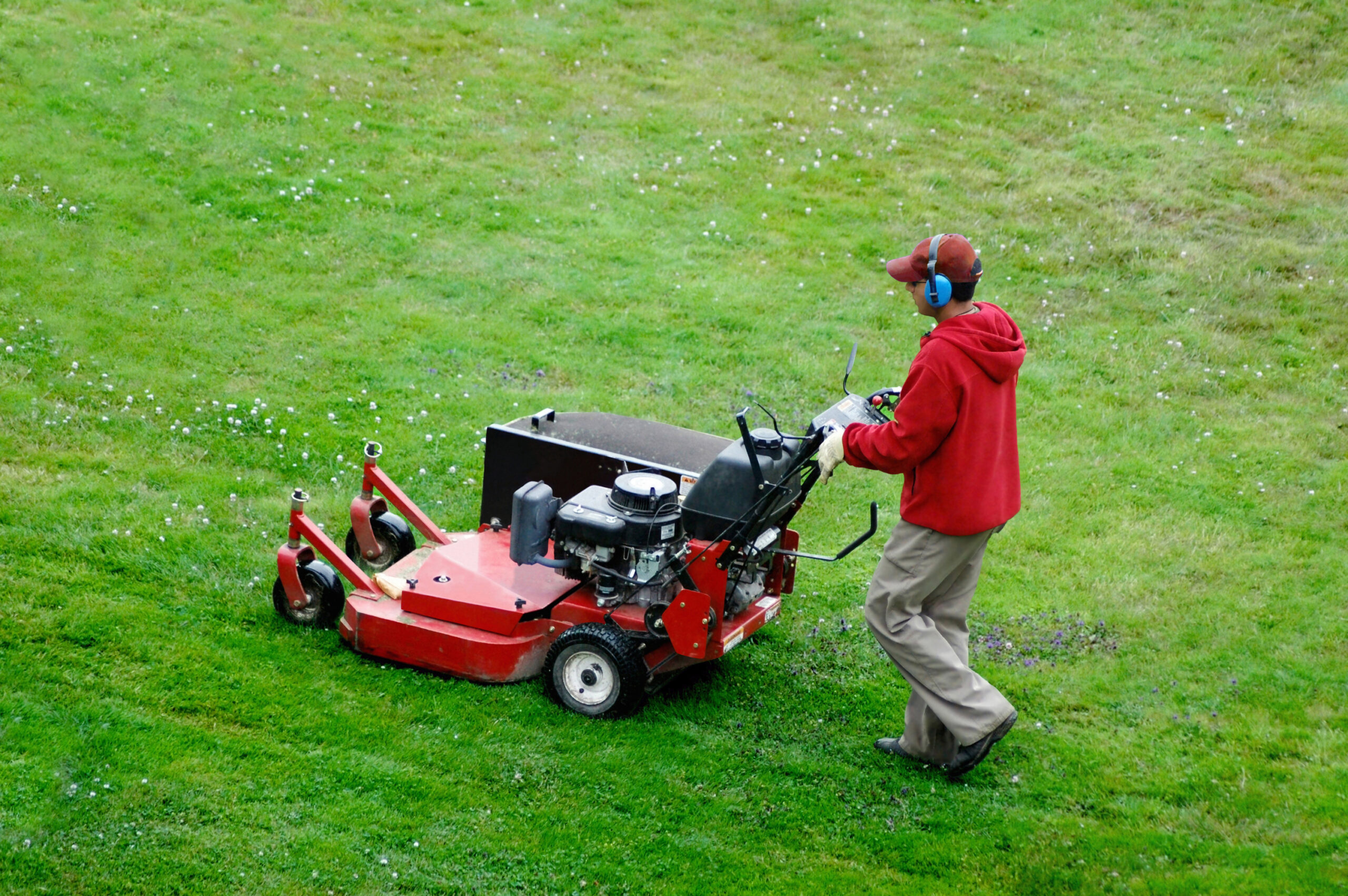
For Maine lawns growing in shade, mowing somewhere around 2.5 to 3.5 inches is generally a better approach than scalping the lawn short. And keep the mower blade sharp.
Shade-stressed grass already has enough working against it. A dull blade that tears the grass rather than cutting it cleanly adds unnecessary stress.
This is one place where trying to make the lawn look like a putting green usually backfires.
Does Shaded Grass Need More Water?
Not always. It is tempting to assume shade means the soil stays wet, but underneath mature trees the opposite may happen.
Tree roots can pull a tremendous amount of moisture from the ground. The grass may therefore be both shaded and dry.
On the other hand, shaded areas beside buildings or in poorly drained soil may stay wet longer because sunlight and airflow are limited. That is why watering by schedule alone can be misleading.
Check the soil. If it is dry several inches down, water deeply enough to reach the root zone. If the area remains consistently damp, adding more water will not improve the grass.
It may make the situation worse.
Will Overseeding Fix a Thin Shady Lawn?
It can help if there is still enough light for grass to survive. Overseeding introduces fresh grass into thin areas and gives you an opportunity to shift the lawn toward varieties better suited to the site.
For a shady lawn in Southern Maine, that may mean using a quality seed blend with a substantial percentage of fine fescue.
Seed-to-soil contact matters too. Simply tossing seed over existing grass, leaves, or compacted soil can produce disappointing results.
This is where core aeration and overseeding can work well together. Aeration opens the soil, reduces compaction, and creates additional places for seed to settle. The new seed then has a better opportunity to establish.
One Mow Co. provides professional aeration and overseeding using seed blends selected for Maine growing conditions.
What If the Same Shady Spot Keeps Dying Every Year?
Take that as useful information. If you have overseeded the same area three years in a row and the grass disappears every summer, the problem probably is not a lack of seed.
Something about that location is preventing turf from succeeding.
Maybe there is too little sunlight.
Maybe tree roots are dominating the soil.
Perhaps water sits there after storms.
Or the area may be receiving constant foot traffic because it happens to be the shortcut between the deck and driveway.
At some point, adjusting the landscape makes more sense than continuing to fight the site. Good lawn care is not about forcing grass into every square foot of the property. It is about putting the right plant in the right place.
What Grass Type Is Best for Shady Areas of the Yard?
For most Maine homeowners wondering what grass type is best for shady areas of the yard?, fine fescues are the strongest place to start. Creeping red fescue and hard fescue offer good shade tolerance, while turf-type tall fescue can work well where the lawn receives light or partial shade. Kentucky bluegrass may be included in a mixture, but it generally performs better where more sunlight is available.
Seed selection is only one piece of the puzzle.
Give shaded grass a little extra mowing height, avoid pushing it with excessive fertilizer, pay attention to moisture, and consider whether tree pruning could allow more filtered light into the area. If the shade is simply too deep, changing the landscaping may ultimately produce a better-looking yard than repeatedly trying to grow grass where conditions do not support it.
One Mow Co. provides professional lawn mowing, aeration and overseeding, landscape maintenance, and other lawn-care services throughout Kennebunk, Kennebunkport, Wells, York, Biddeford Pool, and surrounding Southern Maine communities.
If the shaded sections of your yard are becoming thin or bare, contact One Mow Co. Their team can help determine whether better seed, aeration and overseeding, or a change in the way the area is managed will give your lawn a better chance to fill in.